
Special Immigrant Juvenile Visa (SIJS)
A compassionate legal pathway for vulnerable children
Special Immigrant Juvenile Status (SIJS) is a critical immigration pathway designed to protect undocumented children under 21 who have been abused, neglected, or abandoned by one or both parents. SIJS offers more than an immigration benefit—it provides stability, safety, and the chance to build a future free from harm. Like all humanitarian processes, it involves multiple steps, each requiring careful legal attention to ensure the child’s rights are fully protected.
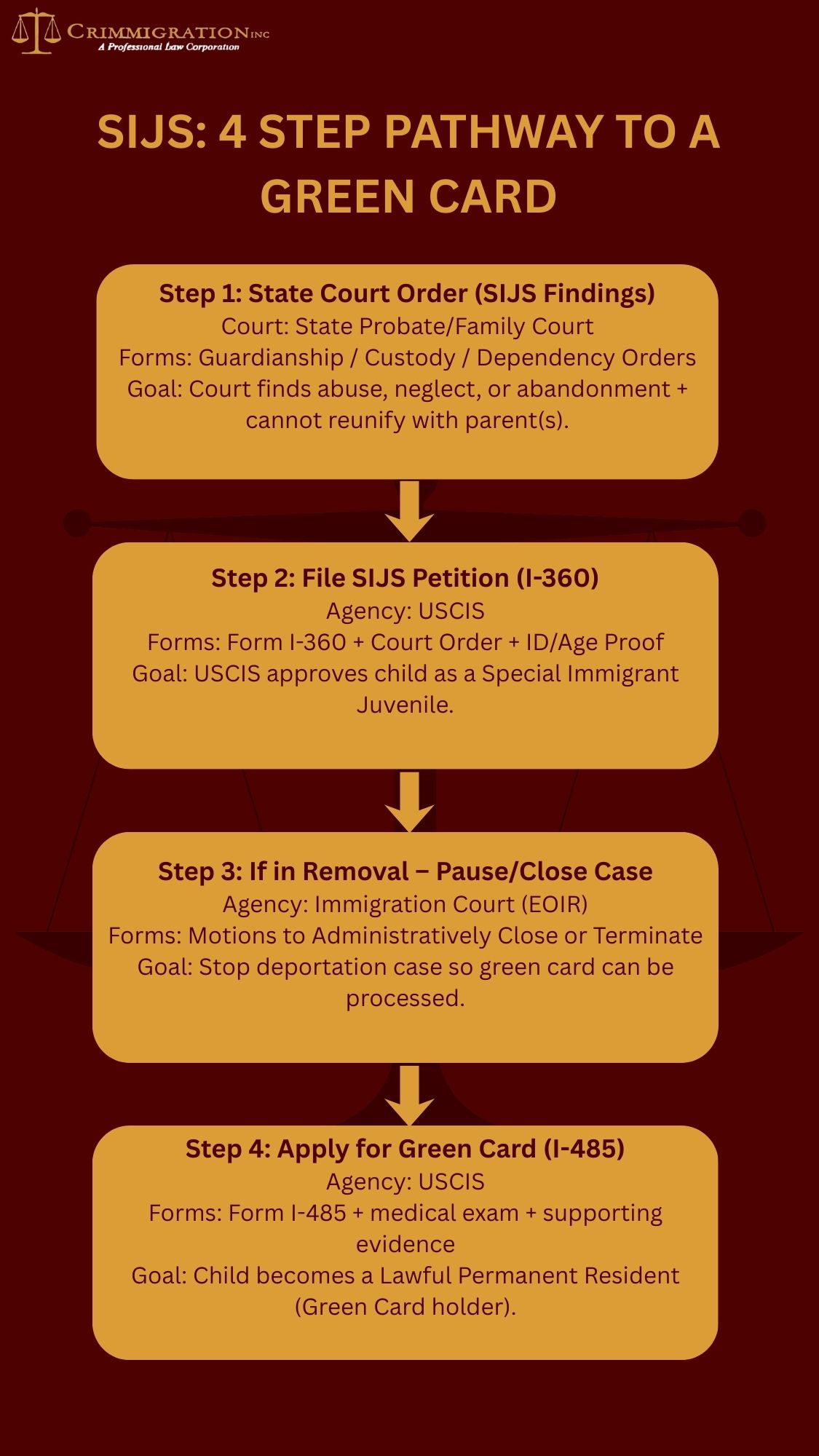
Step 1: Obtaining a State Court Order With SIJS Findings
The SIJS process begins in state juvenile or probate court, not immigration court. The child must obtain a legal custody order—often a guardianship, probate custody order, or juvenile dependency order. Importantly, parentage does not need to be terminated. Instead, the court must issue three required findings:
The child is in the custody of a court-appointed guardian or agency.
Reunification with one or both parents is not viable due to abuse, neglect, or abandonment.
It is not in the child’s best interest to return to their home country.
These findings create the “predicate order” required for SIJS eligibility and serve as the legal foundation for the immigration process that follows.
Step 2: Filing the SIJS Petition (Form I-360)
Once the court order is secured, the next step is filing Form I-360 with U.S. Citizenship and Immigration Services (USCIS). This petition requests that the federal government classify the child as a Special Immigrant Juvenile. Along with the I-360, USCIS requires proof of the child’s identity, age, and the certified SIJS predicate order. At this stage, accuracy and completeness are crucial, as this filing establishes the child’s priority date, which determines when they may later apply for a green card.
Step 3: Closing Removal Proceedings (If Applicable)
If the child is currently in removal (deportation) proceedings, a motion is filed with the immigration court (EOIR) requesting administrative closure so the SIJS petition can move forward outside of court. This pause protects the child from removal while the I-360 is pending. Children not in removal proceedings skip this step, but for those who are, it is a vital protection ensuring that the SIJS process can continue without interference from enforcement actions.
Step 4: Applying for a Green Card (Form I-485)
When the SIJS petition is approved and an EB-4 youth visa becomes available, the child may file for Adjustment of Status (Form I-485) to obtain lawful permanent residence (a green card). Due to significant visa backlogs—especially for countries like Mexico, Guatemala, Honduras, and El Salvador—many applicants must wait several years for their priority date to become “current” on the Visa Bulletin. While waiting, children remain protected from deportation and may access other legal benefits.
A Life-Changing Pathway
SIJS is one of the most powerful humanitarian protections available for undocumented children. It not only protects them from returning to unsafe environments but also places them on a stable path toward lawful permanent residency and, eventually, U.S. citizenship. At Crimmigration Inc., we understand the emotional and legal complexities of this process. Our team approaches SIJS cases with compassion, precision, and the commitment every child deserves.